
Fiber, in my opinion, is SO underrated. Incorporating just the daily recommended amount of fiber into your diet can lead to a multitude of incredible health benefits. Looking to “cleanse” the body? Eat fiber. Want to improve your gut health? Eat fiber. What to lower your cholesterol? Eat fiber! And no, you don’t need to drink chia seed water or a fiber powder to reap the benefits.
Most people in America (around 90% of us) are not eating enough fiber. Some foods that include fiber are fruits, vegetables, whole grains, nuts and seeds. There are two main types of fiber that we will talk about today: insoluble and soluble.
Insoluble Fiber
Insoluble fiber is a key player in digestive health by adding bulk to your stool and helping food move smoothly through the digestive tract. This can aid in preventing constipation and promote regularity, making it an essential part of a balanced diet. By incorporating more insoluble fiber-rich foods into your meals, you not only support your digestive system but also contribute to overall wellness, keeping you feeling light and energetic.
Good Sources of Insoluble Fiber:
- Whole Wheat Bread
- Wheat Bran
- Nuts
- Beans
- Potatoes
- Green Beans
- Cauliflower
Soluble Fiber
Think of soluble fiber as “sticky” fiber. This nutrient dissolves in water to form a gel-like substance, helping to regulate blood sugar levels by slowing digestion, which can be especially beneficial for those managing diabetes. It also aids in lowering cholesterol levels, promoting heart health, and enhancing feelings of fullness, making it a great ally for weight management.
Good Sources of Soluble Fiber:
- Oats
- Seeds
- Citrus Fruits
- Vegetables
- Barley
- Psyllium
How Much Fiber Do You Need?
The general recommendation for fiber intake is 14 grams per 1,000 calories. On average, aim for 25-30 grams of fiber per day. “Too much of a good thing” still applies to fiber intake. Excessive amounts of fiber can cause gastrointestinal distress, such as bloating, constipation, cramping, gas, and diarrhea. If you are going to increase your fiber intake, start slowly and ensure that you are drinking enough water to avoid any unwanted symptoms.
High Fiber Ideas
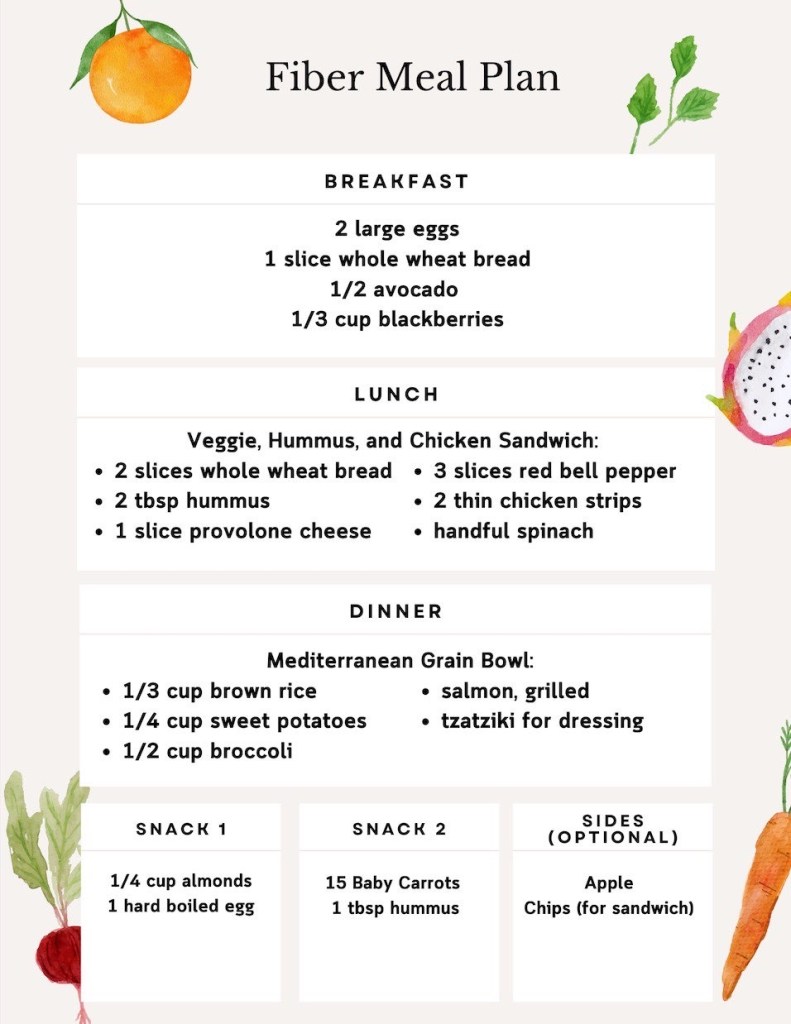

*For this post, I am defining high fiber as >5g per snack. Meal plan included 30 grams of fiber. Fiber contents were found on product food labels and at FoodData Central (https://fdc.nal.usda.gov/)
SOURCES:
- https://www.ncbi.nlm.nih.gov/pmc/articles/PMC6124841/
- https://www.cdc.gov/nchs/nhanes/wweia.htm
- https://pubmed.ncbi.nlm.nih.gov/26711548/
- https://pubmed.ncbi.nlm.nih.gov/29566200/
- https://pubmed.ncbi.nlm.nih.gov/29098294/
- https://ask.usda.gov/s/article/How-much-dietary-fiber-should-I-eat#:~:text=Dietary%20fiber%20intake%20is%20recommended%20at%2014,dietary%20fiber%20intake%20should%20be%2028%20grams.




 Servings of Nutrition
Leave a Reply